![[personal profile]](https://www.dreamwidth.org/img/silk/identity/user.png)
Excellent news!
Mar. 29th, 2010 11:54 pmThe topic I wanted to use for my final project in Visual Rhetoric is go! Let me 'splain.
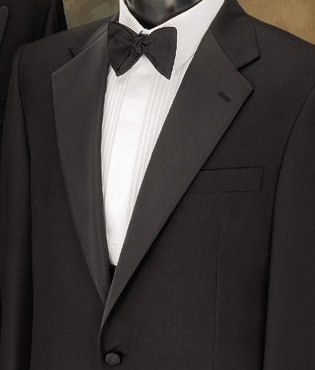
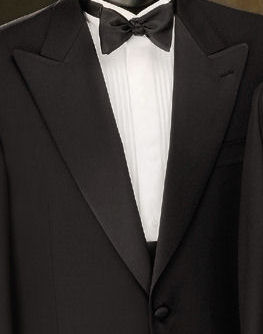
In a fit of starry-eyed obsession with RDJ's Sherlock Holmes wardrobe this past January, I was doing some very surface-level research on Victorian men's fashion and suiting in general. Like, just to get some ideas and learn some terminology and stuff. Among other things, I learned that there are two common types of jacket lapels: notched lapels, which look like this, and peaked lapels, which look like this. Cool, right? So then later, I was watching some vintage Law & Order, as is my custom, and I started to notice the characters' lapels.
Now, pretty much every character wears notched lapels at least some of the time. It's the most common style, after all. But I began to see an interesting pattern among the most evil, unrepentant defendants, the sleaziest defense attorneys, the agents of corruption--these were the characters who tended to wear peaked lapels. Furthermore, Jack McCoy never wore them. At first I thought it was coincidence, but then I began to catch myself correctly identifying the criminal based on the type of lapel he was wearing. And then Jamie Ross showed up, in a peaked-lapel pinstripe power suit from her first appearance. Villain? No. Ruthless, ambitious, results-oriented? Absolutely. And that's when I realized there was some legitimate academic potential in the subject. The Rhetoric of Costuming. What do clothes tell us about fictional characters, when the script can't?
So yeah, my professor was all, "I've never thought about that! But it's definitely related to visual persuasion, so I guess you can do it." Woo! The bad news is, I'm kind of having trouble finding relevant sources. But whatever; they've got to be out there.
In related news, I need this jacket right this very second. Not to wear, just to look at. Every day. For hours on end.
In a fit of starry-eyed obsession with RDJ's Sherlock Holmes wardrobe this past January, I was doing some very surface-level research on Victorian men's fashion and suiting in general. Like, just to get some ideas and learn some terminology and stuff. Among other things, I learned that there are two common types of jacket lapels: notched lapels, which look like this, and peaked lapels, which look like this. Cool, right? So then later, I was watching some vintage Law & Order, as is my custom, and I started to notice the characters' lapels.
Now, pretty much every character wears notched lapels at least some of the time. It's the most common style, after all. But I began to see an interesting pattern among the most evil, unrepentant defendants, the sleaziest defense attorneys, the agents of corruption--these were the characters who tended to wear peaked lapels. Furthermore, Jack McCoy never wore them. At first I thought it was coincidence, but then I began to catch myself correctly identifying the criminal based on the type of lapel he was wearing. And then Jamie Ross showed up, in a peaked-lapel pinstripe power suit from her first appearance. Villain? No. Ruthless, ambitious, results-oriented? Absolutely. And that's when I realized there was some legitimate academic potential in the subject. The Rhetoric of Costuming. What do clothes tell us about fictional characters, when the script can't?
So yeah, my professor was all, "I've never thought about that! But it's definitely related to visual persuasion, so I guess you can do it." Woo! The bad news is, I'm kind of having trouble finding relevant sources. But whatever; they've got to be out there.
In related news, I need this jacket right this very second. Not to wear, just to look at. Every day. For hours on end.